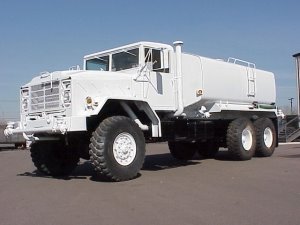
Frequent training and review of safety concerns is a must to ensure safe operation of fire tankers
 |
| North Tree Fire Water tender After Rollover Accident Leaving California Wildfire |
Use of fire service Water Tenders (also called water tankers back east) is on the rise due to growing urban sprawl. More people are building houses in the wildland/urban interface and in areas that we once thought of as farmland—areas that don’t have the benefit of a fixed water supply system. But these properties still require high fire flows.
One of the only effective methods we have to get water to these locations is to haul it in using tankers and to establish a water tender shuttle operation using drop tanks or a nurse tanker operation, where the water is pumped into or connected directly to the first-arriving units.
Although we once only considered water tenders a rural apparatus, many of America’s fastest growing cities—like Charlotte, Phoenix and Fort Worth—are including them in their operations due to growth and annexation into areas without hydrants. But this increased use is cause for concern. Compared with other apparatus, tankers are associated with a disproportionately high number of accidents and firefighter deaths. In fact, as early as 2003, the U.S. Fire Administration recognized this threat, and responded with a report, “Safe Operation of Fire Tankers,” which remains a valuable resource today.
Although we once only considered water tenders a rural apparatus, many of America’s fastest growing cities—like Charlotte, Phoenix and Fort Worth—are including them in their operations due to growth and annexation into areas without hydrants. But this increased use is cause for concern. Compared with other apparatus, tankers are associated with a disproportionately high number of accidents and firefighter deaths. In fact, as early as 2003, the U.S. Fire Administration recognized this threat, and responded with a report, “Safe Operation of Fire Tankers,” which remains a valuable resource today.
With this in mind, it’s never a bad time to review tanker driving operations. Following are a few recommended best practices that can be used for training purposes or when reviewing standard operating procedures (SOPs) related to water tender use and operations.
Use Experienced Drivers
Relegating the water tenders duties to one of your least-experienced driver/operators is an accident waiting to happen. You wouldn’t assign them to drive your newest engine or the aerial ladder, so why would you let them drive the tanker? Most tankers are oversized and very heavy, with high centers of gravity, making them difficult to operate—so use the best driver/operators for the job.
Use Experienced Drivers
Relegating the water tenders duties to one of your least-experienced driver/operators is an accident waiting to happen. You wouldn’t assign them to drive your newest engine or the aerial ladder, so why would you let them drive the tanker? Most tankers are oversized and very heavy, with high centers of gravity, making them difficult to operate—so use the best driver/operators for the job.
Stations that house water tenders should provide additional training to those members assigned tanker-driving duties. Training should include the dangers associated with tanker operations and a review of tanker SOPs.
Slow Down
Because of their size and weight, water tenders don’t handle or drive like other apparatus. Speed is considered one of the leading causes of tanker-related accidents. Being watchful of your speed is especially important when operating in areas where roads are narrow or have soft shoulders. Remember: Posted speeds on curves are applicable to passenger vehicles during ideal weather conditions, not for a tanker carrying 3,000 gallons of water.
Determine the Appropriate Response Mode
A clearly written SOP should cover the conditions that warrant when a water tender should respond to an incident in an emergency mode. Tankers often serve in more of a support role by supplying water to initial-arriving companies. Before each tanker response, ask yourself whether the tanker needs to respond with lights and sirens to make a difference in the operation.
Because of their size and weight, water tenders don’t handle or drive like other apparatus. Speed is considered one of the leading causes of tanker-related accidents. Being watchful of your speed is especially important when operating in areas where roads are narrow or have soft shoulders. Remember: Posted speeds on curves are applicable to passenger vehicles during ideal weather conditions, not for a tanker carrying 3,000 gallons of water.
Determine the Appropriate Response Mode
A clearly written SOP should cover the conditions that warrant when a water tender should respond to an incident in an emergency mode. Tankers often serve in more of a support role by supplying water to initial-arriving companies. Before each tanker response, ask yourself whether the tanker needs to respond with lights and sirens to make a difference in the operation.
The incident commander should make every effort to request tankers to support the operation as early as possible, so that tankers can have ample time to arrive on scene before water supplies become critical to the operation’s success.
Limit Off-Road Use
Use caution when taking water tenders off-road to support wildland fire suppression or other activities. The weight of the unit and its high center of gravity on uneven terrain increase the risk of mishaps. Also be aware of soft ground and parking lots during hot weather where the apparatus may become stuck due to its weight.
Prepare for Poor Roadways
Roads in rural or recently annexed areas may not be as good as those in the more developed parts of your response area. These roads may be in poor repair, with large potholes, tall crowns and soft or non-existent shoulders. They can even be unpaved. Use caution and drive appropriately for the conditions.
Beware of Bridges
In areas where water tenders must operate, preplan routes to avoid bridges that won’t support the weight of the tanker. The rated capacity of load-zone bridges should be clearly marked and followed.
Don’t Overcorrect
One of the leading causes of water tender related accidents is due to the driver overcorrecting after allowing the right-side tires to drop off the road. Overcorrecting the wheel to get the unit back up on the roadway may cause the truck to go into oncoming traffic or to roll because of the weight and high center of gravity. If the rear wheels leave the road, reduce speed and slowly bring the water tender back onto the roadway; resist jerking the wheel to help correct the vehicle’s direction.
Limit Off-Road Use
Use caution when taking water tenders off-road to support wildland fire suppression or other activities. The weight of the unit and its high center of gravity on uneven terrain increase the risk of mishaps. Also be aware of soft ground and parking lots during hot weather where the apparatus may become stuck due to its weight.
Prepare for Poor Roadways
Roads in rural or recently annexed areas may not be as good as those in the more developed parts of your response area. These roads may be in poor repair, with large potholes, tall crowns and soft or non-existent shoulders. They can even be unpaved. Use caution and drive appropriately for the conditions.
Beware of Bridges
In areas where water tenders must operate, preplan routes to avoid bridges that won’t support the weight of the tanker. The rated capacity of load-zone bridges should be clearly marked and followed.
Don’t Overcorrect
One of the leading causes of water tender related accidents is due to the driver overcorrecting after allowing the right-side tires to drop off the road. Overcorrecting the wheel to get the unit back up on the roadway may cause the truck to go into oncoming traffic or to roll because of the weight and high center of gravity. If the rear wheels leave the road, reduce speed and slowly bring the water tender back onto the roadway; resist jerking the wheel to help correct the vehicle’s direction.
Wear Seatbelts
Nationwide, water tenders have been involved in a high number of rollovers. The DOT says that nearly 80% of all fatalities in truck rollover accidents involved the ejection of an unbelted occupant. Follow your state laws and department SOPs on seatbelt use; better yet, just wear your seatbelt at all times.
Drive Safe
Fire service water tenders are an important part of many departments’ operations. Recognizing the dangers and unique operating characteristics of these large and heavy apparatus is the first step toward their safe operation. Take time to review the USFA guide, “Safe Operation of Fire Tankers”—and hit the road safely!
Nationwide, water tenders have been involved in a high number of rollovers. The DOT says that nearly 80% of all fatalities in truck rollover accidents involved the ejection of an unbelted occupant. Follow your state laws and department SOPs on seatbelt use; better yet, just wear your seatbelt at all times.
Drive Safe
Fire service water tenders are an important part of many departments’ operations. Recognizing the dangers and unique operating characteristics of these large and heavy apparatus is the first step toward their safe operation. Take time to review the USFA guide, “Safe Operation of Fire Tankers”—and hit the road safely!


